
Paper straws are now a top choice to replace single-use plastic. Businesses and consumers use them to reduce waste and find greener packaging solutions. However, many people still have questions about them. They wonder about their durability, safety, and true impact on the planet.
The answers depend entirely on how the straws are made. Material choice, layer thickness, and factory standards change everything. A cheap straw turns to mush, but a well-made one stays strong.
In this ultimate guide, we will break down everything you need to know about paper straws. You will learn how paper straws are made and how to fix the soggy straw problem.

The Surprising History of the Paper Straw
Who Invented the Paper Straw?
The modern paper straw was invented by an American named Marvin Chester Stone. He was a manufacturer of paper cigarette holders in Washington, D.C.
When Were Paper Straws Invented?
Marvin Stone invented and patented the paper straw in 1888.
Before his invention, people used natural rye grass or wheat stems as straws. But these natural materials had major flaws. They cracked easily, dissolved quickly, and left a gritty, grassy taste in the drink.
One day, Stone was drinking a mint julep through a rye straw. The straw started to fall apart and ruined the flavor of his drink. Using his experience with paper rolling, Stone took a strip of paper and wrapped it around a pencil. He glued the edges together to form a sturdy tube.
To keep the paper from getting soggy, he swapped regular paper for manila paper and coated it with paraffin wax. On January 3, 1888, Stone received his first patent. By 1890, his factory was mass-producing paper straws.
The Fall and Return of Paper Straws
Paper straws became highly popular in restaurants and soda fountains. But in the mid-20th century, cheap plastic manufacturing took over. Plastic straws replaced paper because they cost less and lasted longer in liquids.
Today, plastic pollution is a major global issue. Strict single-use plastic bans and corporate environmental goals are forcing businesses to change.
Thanks to advances in paper technology and food-safe glues, modern paper straws are making a massive comeback. They are now stronger, safer, and better for business than ever before.
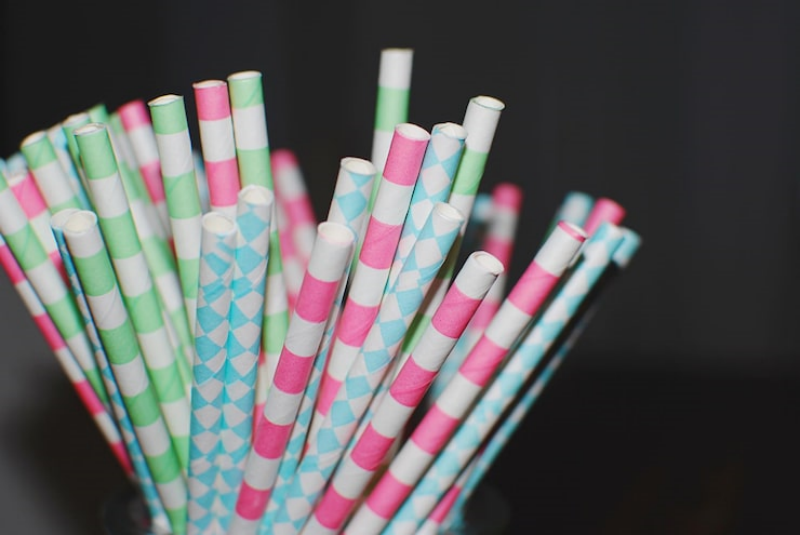
What Are Paper Straws Made Of?
A paper straw looks simple, but it requires precise engineering to stay strong in liquid. Unlike plastic straws, paper straws use renewable materials designed for short-term food contact. A premium, food-safe paper straw relies on four main components:
What Is Paper Straws Material
Virgin Kraft Paper: This is the most popular choice for premium straws. Made from 100% fresh wood pulp, it has long, strong fibers that offer excellent natural water resistance and vertical strength. It is entirely clean, safe, and free from any chemical history.
Bamboo Paper: An increasingly popular alternative to wood pulp. Bamboo grows incredibly fast, making it highly sustainable. Bamboo fibers are naturally strong and rigid, allowing straws to remain firm in liquids for longer periods without getting soggy.
FSC-Certified Sustainable Paper: This is virgin paper that carries a strict environmental seal. The Forest Stewardship Council (FSC) certifies that the wood pulp comes from legally managed, responsibly harvested forests that prevent deforestation. It is the gold standard for Western markets with strict environmental compliance laws.
Note on Recycled Paper: High-quality manufacturers avoid using recycled paper for the straw body. Recycled cardboard can contain trace heavy metals, chemicals, or old inks from its past life, making it unsafe for direct contact with food and beverages.
The Essential Binding and Finishing Materials
To turn these raw papers into a functional drinking straw, factories combine them with three other critical materials:
Water-Resistant Food-Grade Adhesives: Specialized water-based polymer emulsions keep the paper layers tightly bound. These premium adhesives are engineered to remain stable in liquids for 2 to 4 hours without dissolving or changing the taste of the drink.
Non-Toxic Soy or Vegetable Inks: For branded logos, patterns, or colored stripes, standard chemical inks are forbidden. Reputable factories use natural, soy-based or vegetable-based inks that are completely food-safe and biodegradable.
Aqueous (Water-Based) Coatings: Instead of cheap plastic linings (like PE) that ruin the straw’s eco-friendly status, high-end manufacturers spray an invisible, water-based barrier onto the paper fibers. This layer repels liquid and extends the straw’s lifespan while remaining 100% compostable.

Are Paper Straws Safe?
For businesses and consumers, safety is the number one priority. Because paper straws directly touch beverages, they face heavy safety scrutiny. Are they truly safe? The short answer is yes, but only if they come from a certified, compliant manufacturer.
To understand the full health and safety picture, bulk buyers must look closely at three major areas:
Chemical Safety: The Big Questions
1. Are Paper Straws Toxic or Carcinogenic?
Natural wood pulp and food-grade paper are completely safe. However, whether a finished straw is toxic depends entirely on the factory chemicals. If a supplier uses cheap industrial glues or toxic chemical dyes, those substances can bleed into your drink. This chemical migration can happen easily with acidic juices, sodas, or alcohol. Choosing a certified manufacturer ensures that all inks, adhesives, and papers are entirely non-toxic.
2. Do Paper Straws Contain PFAS?
The short answer is frequently, yes—if they are unverified. Many independent studies have found that up to 90% of tested paper straw brands contained measurable amounts of PFAS (per- and polyfluoroalkyl substances).
Why? Because paper naturally absorbs liquid and collapses, low-tier factories apply PFAS—known as “forever chemicals”—as a cheap, fast waterproof coating. Because PFAS accumulate in the human body permanently and carry serious health risks, governments are enforcing strict bans. Modern enterprise buyers must demand a certified “PFAS-Free” laboratory report before purchasing. High-end suppliers use safe, water-based barrier coatings instead.
3. Are Paper Straws Gluten-Free?
Yes, most modern paper straws are naturally gluten-free. However, some bulk paper manufacturers utilize cost-effective wheat-based starches as adhesives. For consumers suffering from severe celiac disease, trace elements of these binding starches can dissolve into drinks and trigger allergic reactions. Procurement teams should specify 100% synthetic polymer food-grade resins or corn-based starches that are verified allergen-free.
Physical Safety and Choking Risks
Cheaply engineered 2-ply paper straws, or those using low-grade water-soluble glues, fail under moisture within 10 to 15 minutes.
As the paper pulp loses strength, it tears into wet, fibrous pulp chunks. For family restaurants, schools, or healthcare venues, this represents a severe choking hazard. In fact, European consumer protection agencies have issued formal safety warnings after documenting near-miss choking cases from decomposing straws. Buying teams must secure 3-ply or 4-ply high-density structures that maintain zero-disintegration limits for hours.
Key Certifications to Look For
To guarantee physical and chemical safety, never buy uncertified items. Always check for these three standards:
FDA Approval (United States): Ensures all materials, glues, and inks are completely safe for food contact.
LFGB Compliance (Europe): A strict European standard that tests the chemical migration of packaging materials into liquids.
FSC Certification: Proves the raw paperboard comes from sustainably and legally managed forests, bypassing illegal deforestation.

Types of Paper Straws
Paper straws are not one-size-fits-all. Different beverages require specific lengths, diameters, and shapes. Three main factors categorize commercial paper straws:
1. Structural Styles
The physical shape of the straw dictates how it is used and packed:
Standard Straight Straws: This is the most common and cost-effective format. They feature rigid, straight walls and are optimized for high-speed factory production, offering the lowest unit cost.
Flexible (Bendy) Straws: Bending a paper tube without collapsing the interior is difficult. Factories use specialized machinery to press micro-grooves into the top section. They carry a 15% to 25% price premium due to the extra labor.
Industrial U-Bend Straws: These are engineered specifically for juice boxes and milk cartons. They are bent into a sharp “U” shape and attached to massive spools that feed directly into high-speed beverage packaging machines.
Spoon Straws: A unique hybrid design with a scoop-shaped end. These are widely used for shaved ice, slushies, and thick ice cream treats.
2. Dimensional Calibration: Diameters and Drinks
Paper straws are classified by their outer diameter. The width must match the thickness of the liquid being served:
Slim / Cocktail Bore (4mm – 5mm): Short, ultra-slim straws used primarily in bars and lounges. They serve double duty for stirring spirits and sipping short cocktails.
Standard Bore (6mm): The universal choice for everyday dining, corporate cafeterias, and catering. Ideal for low-viscosity liquids like water, sodas, iced teas, and clear juices.
Smoothie Bore (8mm – 10mm): Slightly wider to accommodate thicker drinks. This size is recommended for pulpy juices, blended iced coffees, and light milkshakes.
Boba / Wide-Bore Straws (12mm): Oversized straws designed specifically for thick bubble tea and tapioca pearls. These require a thick 4-ply build so the wide walls do not collapse under intense suction pressure. They usually feature a sharp, pointed tip to puncture plastic sealing films easily.
3. Delivery Formats: Bulk vs. Wrapped
How straws are packaged affects your sanitation compliance and packaging costs:
Bulk Box Packing (Unwrapped): Thousands of loose straws are packed directly into a master carton. This format provides the lowest unit cost and packaging waste. It is ideal for bars or fast-food stations equipped with enclosed dispensers.
Individually Paper-Wrapped Straws: Every straw is sealed inside a thin paper sleeve. This introduces a 5% to 10% packaging surcharge, but it is required for delivery orders and hotel room service to guarantee absolute hygiene. The paper sleeve also offers great real estate for printing your custom brand logo.

Are Paper Straws Environmentally Friendly?
The primary reason businesses switch to paper straws is to help the planet. But are they actually better for the environment? The short answer is yes, they are a massive upgrade over plastic. However, their true eco-friendliness depends on how they are made and thrown away.
Are Paper Straws Actually Better for the Environment?
Yes, but the real benefit happens at the end of their life.
Making a paper straw actually takes more energy and water than making a plastic one. However, traditional plastic straws take up to 500 years to break down. Even worse, they fracture into toxic microplastics that permanently pollute our oceans. A pure paper straw decomposes completely and harmlessly in seawater within 30 to 60 days, reducing the threat to marine life to zero.
Are Paper Straws Sustainable?
They are sustainable only if the wood pulp is sourced correctly.
Because paper comes from trees, unverified factories can cause deforestation. To make sure your straws are truly green, your procurement contracts must require FSC (Forest Stewardship Council) certification. This guarantees that the forest is replanted as trees are harvested.
Are Paper Straws Biodegradable?
High-quality paper straws are 100% biodegradable. Microorganisms in soil or water rapidly break them down into water and natural organic matter.
Beware of the Greenwashing Trap: Some low-end factories add a hidden plastic (PE) lining to make straws waterproof for cheap. These composite straws cannot fully degrade in nature. They violate plastic-free laws and expose your brand to legal risks. Always ask for Aqueous (water-based) coated options instead.
Are Paper Straws Compostable?
Yes. Clean paper straws perform exceptionally well in both home and industrial compost bins. They break down into nutrient-rich soil in just a few weeks.
When buying in bulk, always require compostability test reports (like EN 13432 for Europe or ASTM D6400 for the U.S.). This ensures that the glues and vegetable inks will not leave heavy metals in the soil.
Are Paper Straws Recyclable?
Technically yes, but in the real world, no.
Clean paper can be recycled. However, once a consumer dips a straw into coffee, soda, or milk tea, the paper fibers become contaminated with food waste. Recycling centers around the world reject food-soiled paper because it ruins their machinery.
The Best B2B Strategy: Do not tell customers to recycle used paper straws. Instead, guide your supply chain to route them as compostable bio-waste.

How Long Do Paper Straws Last?
The biggest complaint about paper straws is that they can turn to mush before a user finishes their drink. For businesses, finding a straw that stays strong from the first sip to the last drop is essential for customer satisfaction.
Active Lifespan: Durability in Liquids
The time a straw maintains its shape after being submerged depends entirely on its manufacturing quality and the temperature of the drink:
Low-Tier Straws (30 to 60 Minutes): Standard 2-ply or 3-ply paper straws use basic glues. They begin to soften and get soggy within an hour.
The Gold Standard (2 to 4 Hours): Premium custom paper straws use a dense 4-ply build. They also feature a waterproof, water-based coating. These straws hold their shape and suction for 2 to 4 hours in cold sodas, milkshakes, and cocktails.
Hot Beverage Limits (Under 15 Minutes): Standard paper straws are designed only for cold or iced drinks. Liquids above 60°C (140°F) rapidly melt food-grade glues and soften paper fibers. For hot coffee or tea, businesses should use wooden stirrers instead.
Three Factors That Prevent Sogginess
Not all paper straws are created equal. Their strength relies on three factory choices:
The Layer Count (Ply): Cheap options use only 2 layers of paper, which collapse in 15 minutes. High-quality factories use 3-ply or 4-ply construction to slow down liquid absorption.
Paper Density (GSM): GSM measures paper weight. Tightly packed, high-GSM virgin kraft paper resists water penetration much better than thin, low-cost paper.
Aqueous Coating Technology: Premium suppliers spray a micro-thin, water-based barrier onto the paper fibers. This PFAS-free shield keeps the straw rigid for hours without stopping it from composting.
Shelf Life: Stability in Bulk Storage
B2B buyers usually order custom paper straws in massive bulk quantities to get volume discounts. Therefore, warehouse stability is critical.
The Storage Window: In a clean, dry, climate-controlled warehouse, unopened boxes of paper straws have a stable shelf life of 24 to 36 months.
The Moisture Risk: Unlike plastic, paper naturally absorbs humidity from the air. If bulk boxes are left open in damp warehouses, the straws will lose their crispness and the glues can degrade.
Bulk straws must be packed inside sealed, moisture-proof inner bags before being boxed into cardboard shipping cartons.

Can Paper Straws Be Customized?
For coffee shop chains, hotels, and retail brands, a paper straw is more than a tool. It is a powerful marketing opportunity. Every time a customer takes a sip, your logo or brand colors are directly in their line of sight.
Because they are made of paper, these straws offer a far better canvas for creative design and crisp printing than plastic ever did.
1. Colors, Patterns, and Logos
The exterior layer of a paper straw acts as a visual touchpoint. Factories use high-speed printing presses to apply designs before rolling the paper into tubes:
Classic Patterns: The most cost-effective custom runs use standard templates like diagonal stripes, polka dots, or seasonal holiday prints.
Solid Branding: If your brand requires a solid color, the factory can apply a full coat of ink.
2. Custom Lengths and Bore Sizes
Customization must be engineered to fit your specific drinkware portfolio. Factories can easily adjust their cutting blades to change dimensions:
Custom Lengths: Standard commercial straws are 197 mm long. However, factories can cut short 150 mm straws for cocktail glasses, or extra-long 260 mm straws for large stadium cups.
Bore Configurations: Match the inner width directly to your menu. You can order a standard 6mm bore for sodas, an 8mm bore for smoothies, or a wide 12mm bore for bubble tea. For bubble tea, you can also request a sharp, 45-degree bevel cut to puncture cup sealing films easily.
3. Branded Wrapper Packaging
For food courts, delivery orders, and when individually wrapped straws, the protective sleeve provides a second marketing space:
Sleeve Printing: Manufacturers can print your logo, tagline, or a promotional QR code directly onto the paper wrapper sleeve using eco-friendly inks.
Texture Upgrades: For luxury hotel room service, you can upgrade standard wrappers to high-density, matte-finished white paper or unbleached kraft paper. This reinforces a premium, organic feel before the customer even unboxes the straw.

Conclusion
Switching to paper straws is a smart and necessary move for modern brands. True quality balances materials, durability, and safety. Premium straws rely on a dense 3-ply or 4-ply build using virgin kraft paper, food-safe glues, and non-toxic soy inks. Sourcing from certified factories ensures your straws are completely PFAS-free and compliant with FDA and LFGB laws. This protects your business from liability. It also keeps straws from breaking apart into physical choking hazards.
Ready to Upgrade Your Supply Chain?
At Artcool, we make sourcing high-quality, eco-friendly paper products simple and cost-effective. As a trusted global manufacturer with facilities across China, Vietnam, Malaysia, and Indonesia, we provide flexible production solutions tailored to your market’s strict compliance laws.
Whether you need custom-branded straws for a major restaurant chain or a full lineup of retail-ready party supplies, our team is here to help. We optimize your procurement costs without ever cutting corners on quality.
[Contact Artcool Today] to request your free samples, get custom dielines, and discover how our global manufacturing network can protect your profit margins.


